Medical Light
Light (from UV to infrared) is a versatile tool in medicine, with some applications long established in clinical practice and others showing promising but preliminary results in research.
Medical Applications by Light Wavelength.The wavelength of light determines how deeply it penetrates tissue and what biological effect it has.
Ultraviolet (UV):
High energy, shallow penetration (epidermis/dermis).
Examples. Phototherapy. Psoriasis, vitiligo, eczema. Sterilisation: UV-C light disinfection in hospitals.
Visible Light:
Perceived as colours, moderate penetration.
Surgical/Examination Lighting. High intensity, shadow free illumination for procedures. Photodynamic Therapy. Activates drugs to destroy cells (skin cancers, acne). Neonatal Jaundice. Blue light breaks down bilirubin.
Infrared (IR):
Invisible, penetrates deeply into muscles/nerves/bones.
Deep Tissue Heating. Pain management, muscle relaxation. Photobiomodulation. Uses red/NIR light to stimulate healing.
Established and Validated Uses
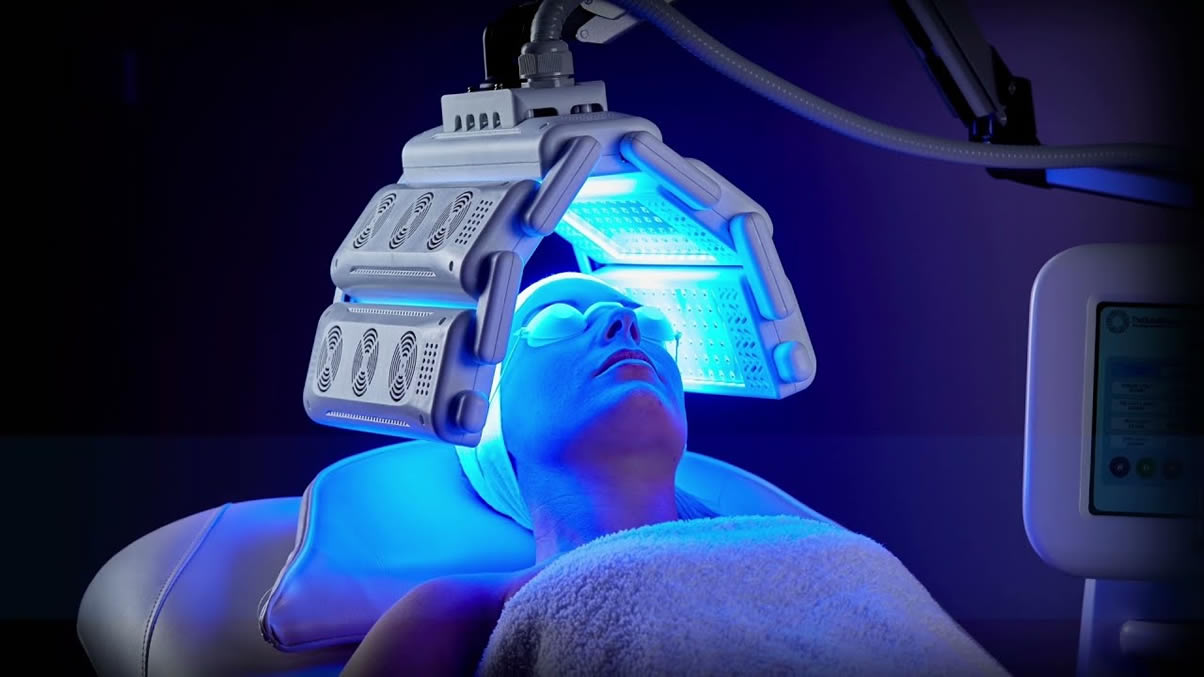
Photodynamic Therapy (PDT). A standard treatment where light (often red or blue) activates a topical drug to destroy targeted cells. It is FDA approved for treating precancerous skin lesions, thin skin cancers, acne and psoriasis.
Specialised Medical Lighting. Engineered lighting systems are critical in healthcare settings. Surgical lights provide precise, shadow free illumination, while circadian lighting in patient rooms mimics natural daylight to support recovery and sleep regulation.
Targeted Therapies. Narrow band UV-B light is a first line therapy for moderate to severe psoriasis.
Promising but Evolving Applications. Photobiomodulation (PBM), particularly using red and near infrared (NIR) light, is an active area of research with mixed levels of evidence.
Best Supported Uses. The strongest evidence is for promoting hair regrowth in androgenetic alopecia and improving signs of skin ageing (fine lines, wrinkles). Effects are modest and require consistent, ongoing treatment.
Areas with Preliminary Support. Research suggests potential for wound healing and reducing inflammation in chronic conditions like osteoarthritis, though data can be conflicting. Important caveat. Many studies are small, and benefits often cease when treatment stops.
Emerging Neurological Research. Early stage studies indicate that specific medical grade NIR devices might help reduce brain inflammation, with preliminary research in athletes and studies planned for TBI patients. This is not yet a standard treatment.
Consumer Caution. The market is full of at home devices, which are typically much less powerful than clinical systems. While generally safe for short term use, their effectiveness varies widely. The FDA clears devices for safety, not necessarily for claimed effectiveness.
New Frontiers and Future Directions
Advanced Diagnostics. Research into novel light properties, like Orbital Angular Momentum (OAM), aims to enable ultra-sensitive, non-invasive monitoring (e.g. for blood glucose) through scattering tissue.
Circadian Health. Public health initiatives now emphasise using light exposure to regulate sleep/wake cycles and improve long term health, moving beyond simple illumination.
Integrated Smart Systems. The future points toward IoT connected, adaptive medical lighting that can adjust for procedures, support patient recovery, and even provide automated disinfection.
Red light therapy evidence levels for different applications
Hair Growth - Androgenetic Alopecia. Strong evidence. Clinically shown to stimulate follicles, increase hair density and thickness. Effects require consistent, ongoing use (3-6 months) and stop when treatment ends.
Skin Rejuvenation & Ageing - Good evidence. Demonstrated to improve skin texture, reduce fine lines/wrinkles, and increase collagen density. Results are progressive and require regular sessions.
Wound & Scar Healing - Promising but Inconsistent. Some studies show faster initial healing but data is conflicting. Not yet a standard treatment.
Acne & Inflammation - Promising Clinical Use. Used in clinical settings to reduce inflammation and treat acne. Considered a treatment option by dermatologists.
Muscle Recovery & Pain Relief - Evidence. Often promoted for athletes, but robust data is lacking. Investigated for joint pain, with more studies needed.
Sleep, Mood, ED, Dementia - Little to No Evidence. Lacks scientifically validated results. Interesting avenues for future research only.