In the Arts: Light as a Dynamic Medium. The traditional canvas is gone. Light itself is the pigment, and space is the canvas.
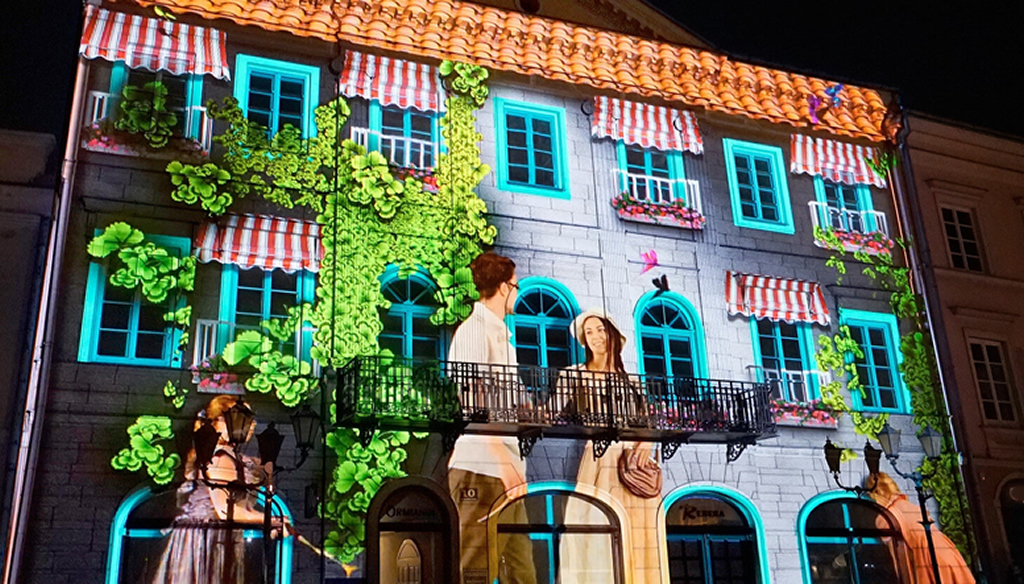
Immersive & Projection Mapping Experiences. Concept: Turning architecture, landscapes and even water into dynamic, storytelling surfaces.
TeamLab: The Japanese art collective creates vast, digital utopias where flowers bloom on your touch and waterfalls flow around your shadow. The boundary between the artwork and the viewer dissolves.
Projection Mapping Festivals: Events like Lyon's Fête des Lumières or Amsterdam Light Festival feature artists who ‘paint’ with light, making buildings appear to breathe, melt, or transform into living creatures.
Interactive Light Sculptures & Installations. Art that responds to the audience's presence, movement, or data.
Random International's ‘Rain Room’: A field of pouring rain where visitors can walk through without getting wet, as sensors create a dry path around them. It is a choreography of light, water, and human movement.
Studio Drift's ‘Franchise Freedom’. A stunning performance of hundreds of illuminated drones flying in a swarm pattern mimicking starlings, exploring the tension between individual freedom and the safety of the collective.
Bio Luminescence and Living Light. Using biological organisms (like algae or bacteria) as a light source.
Designer Teresa van Dongen creates lamps powered by the natural light of microorganisms, creating a gentle, living glow that requires feeding and care, blurring the line between art, science and design.
Holography and Light Field Displays. Moving beyond 2D screens to create true 3D images that can be viewed from all angles.
Companies like Looking Glass Factory are creating displays that allow for holographic like visuals without the need for VR headsets, revolutionising digital art and museum exhibits.
Data Visualisation as Art. Using light to make invisible data streams (like internet traffic, weather patterns, or financial markets) tangible and beautiful.p
Artist Refik Anadol uses AI and machine learning to transform vast datasets into breathtaking architectural projections, creating a ‘data universe’ that tells a story about the world.
Immersive Dining and Nightlife. Restaurants and bars where the entire environment is part of the show, with light, sound, and projection synchronised with the food and drink.
SUPERBUENO in NYC: Features a massive, morphing digital art wall that changes to match the mood of the evening and the cocktails being served.
Projection Mapped Dining. Multi course meals where each dish is accompanied by a custom light and sound story projected onto the table or surrounding walls.
Light Therapy and Wellness.Using specific light frequencies and colours for relaxation, meditation, and purported health benefits.
Chromatic Meditation Pods: Spa like experiences where individuals lie in pods bathed in slowly shifting coloured light, synchronised with binaural beats for deep relaxation.
Sensory Deprivation Floats with Light Shows: Some float tanks now offer optional guided light sequences to enhance the meditative journey.
Interactive Playgrounds and Public Spaces. Turning parks and plazas into interactive light based play zones for all ages.
The 'Cloud' in Toronto: A landmark comprising massive silver pods connected by a mesh net, illuminated at night to create a magical, cloud like structure that people can climb and play on.
Luminous Swings & See saws: Installations where the act of playing (swinging, see sawing) triggers changes in light and sound, encouraging communal play.
Augmented Reality (AR) in Tourism. Using a smartphone or AR glasses to overlay historical information, artistic interpretations or magical elements onto real world landmarks.
An app that lets you point your phone at a ruin to see it rebuilt in light, or one that reveals mythical creatures hiding in a forest at night.
Next Generation Festivals and Events. Music and cultural festivals are becoming total sensory environments where light is a headlining performer.
Artists like Eric Prydz (with his HOLO show), use advanced projection mapping and holographic techniques to create seemingly solid 3D objects and characters sharing the stage with him.
Key Technological Drivers
LED & Laser Technology. Cheap, bright, and energy efficient LEDs, combined with precise lasers, are the basic building blocks.
Projection Mapping Software: Allows artists to fit animations perfectly onto irregular 3D surfaces.
Sensors & IoT (Internet of Things): Motion, heat, sound, and proximity sensors allow installations to react in real time.
AI and Real Time Rendering: AI can generate endless, evolving patterns, while real time game engines (like 'Unreal Engine') allow for instant, reactive visual worlds.
Drone Swarm Technology: Creating massive, animated, flying light displays in the sky.
The unifying principle across all these new approaches is the shift from passive observation to active participation. Light is no longer just something you see; it is an environment you inhabit, a system you interact with, and a medium that responds to you. It is about creating memorable, shareable and deeply personal experiences that merge the digital and physical worlds.